October 22, 2013
October 21, 2013
October 02, 2013
Half An Eye
Heysham Row, Kolkata, 2012
The window prefers to shutter up now, for
The once busy lane has long gone empty
And no voices float up from it.
Having franchised its once delightful vocation
To a shiny eye glinting around the corner,
There’s all the time in the world now
To watch a formerly prim wall shed its crust, brick by brick
And slip into the character it’d long envied the window for –
A hint of a glimpse within from outside.
Even if it stands as empty on the inside!
September 30, 2013
August 31, 2013
Baraf Ka Gola And Waiting
With winter approaching, daylight
succumbs to dusk early, and bright lamps that’d hasten wandering feet home early
on most days now beckon Kolkata’s faithful onto the streets for Durga Puja
celebrations into the wee hours of the night.
The lane is quiet save for the occasional light-stepping hand-held rickshaw puller depositing residents home
in the old neighbourhood on Dr. Rajendra
Road in Bhowanipore.
Shadows breathe life into passing
life just as surely as sodium lamps stretch them into a slow, long caress along
the beaten path.
Outside the north-west entrance
to Northern Park, a woman has set up her Baraf Gola (Ice Gola) stall hoping visitors
to the playground fair in the park will step up for some shaved ice candy.
Coloured syrups in square pockets
line the edge of the wooden frame that betrays its age from years on the road
waiting on street corners, come day, come night.
Among the syrups figure perennial
favourites: Kalakhatta, Khus, Rose and Lemon. A hand powered ice crusher stands
to one side, waiting with the vendor for someone to show up.
The white of shuttered windows
frozen in a perennial pause in the facade of a red building across the lane
from her, strip the night of its studied monotony.
As the night stretches its lonesome
fingers, it traces a path to a family of three in a hand-pulled rickshaw
approaching the entrance to the playground fair that’s come visiting
Bhowanipore in South Kolkata, its character transformed from a small village in
early nineteenth century to a bustling upmarket locality by migrants from
erstwhile East Bengal who settled here in the early 1850s.
~
Behind her, and us, the fair is
in full swing. But we might as well have been wrapped in the silence that
anticipation spreads around it to shore up hope and make waiting, tolerable.
As the lean figure of the hand-pulled
rickshawallah draws into view, emerging from the dark of the street into warm swells
of Sodium dispersing over him, the woman straightens up on the makeshift crate
she’s parked by her roadside stall.
No sooner her eyes adjust to the three
forms in the back of the rickshaw, they light up in anticipation. A half smile
spreads across her face as the trio draw closer, revealing a young boy among them.
"What child can possibly resist a colourful baraf ka gola?" I imagine her thinking.
She looks in their direction
hoping to catch their attention.
And the yellow of sodium suddenly pours its weight into the pause now pregnant with possibilities.
August 25, 2013
A Goan Poder Paddles His Pao Around
No sooner does dawn trickle
through windows in Goa and the familiar
paaaan-pooooh, paaaan-pooooh sounds outside, gladdening many an anxious eye
fidgeting at the window, awaiting the flash of blue before the horn sounds and
the pedal pauses its exertions.
No horn sounds sweeter to a Goan
ear than the one the Poder sounds on his morning rounds through neighbourhoods,
announcing the arrival on the back on his bicycle, of freshly baked pao (bread)
to go with the bhaji (gravy accompaniment) cooking on kitchen stoves in sloping
roof houses tucked away behind trees, past bends in narrow walking paths
that branch off quiet, sometimes lonely roads.
In the cane basket wrapped in the
familiar and distinctive blue tarp, a thousand anxious hearts beat, awaiting the
fragrance of the local village bakery to float in and grace many a Goan’s
morning, afternoon, and evening. I could safely throw in ‘night’ and nothing
would be amiss except the Poder will have retired for the day, his basket empty
and the horn sitting lightly in a corner. The Poder’s horn rings in a Goan dawn
just as surely as the sun.
Pao. What would Goa
be without it? Rather what would Pao be without Goa .
If not for the Pao, the Bhaji
that occasional itinerants like yours truly go seeking in nondescript gaddos
(inns) in the Goan countryside would not have evolved to the state of being
they have in the hands of enterprising cooks.
So long as Poders grace the Goan
countryside not much can go wrong with the Goan dream even if many of the Poders
you see around are not Goans but migrant hands from Hubli or Belgaum , or further afield who graduated from
helping out in the bakery to carting pao around villages hidden from plain
view.
The Poder in the photos here had
rolled down the slope that winds past Balaji Temple off the road that
meanders from Kundaim before rolling through Cuncolim and eventually, to Keri.
Just as we stepped past the gate and
saw him going past, an old lady hailed him. The evening tea was upon the
countryside and pao to go with tea would be just perfect. The lady, more likely
than not, a regular, bought some katre pao and dropped them into a plastic pothi.
Lighter by a few pao, the Poder
rolled merrily away.
Down the road we saw him again.
A smile playing on his face, he had
uncovered the dark brown tarp (a departure from the familiar blue) and handed Kakon
(bangles) from the basket to the little girl waiting on the side of the road
with her dogs for the Poder who passes by a little past four in the afternoon.
Her house lay past the bend in
the path off the road, and hearing the distinctive call of the Poder’s horn,
paaaan-pooooh, paaaan-pooooh, way before he came cycling past, she was up on her
feet and running with the dogs on her heels, in time for the Poder on his afternoon favti (round).
She held five kakon to her chest like it was the only thing that mattered.
It is October, 2008. Five years
down, Goa hasn’t changed much in the
hinterland, right down to dark, winding roads lit up by banana leaves filtering
the Sun to a shade of rich, hearty and heartening green. When the breeze blows, late afternoon light sways with it.
I linger for a moment, wondering if
the Poder does this route. I think it unlikely for we’ve passed him a long way
back and a steep climb beckons before we crest the hill and come to the
junction where the left leads to Vijaydurga temple in Keri.
But then one can never be sure of the Poder's range and pedal power.
Related Links
August 18, 2013
The Keeper Of Memories
I bend my face to the earth
So I can nibble at the memories, paths hold
Of my ancestors who once cantered along, and
Where I now meander in silence.
I’ve all day to myself,
To do as I please among the ruins,
Ranging along paths, to
Secure memories on their margins, marginal or otherwise.
Every once in a while
The fort walls let up on some secrets from a long time ago,
Just enough so I’ll continue rambling among them, for
They’ve stood here a long time, alone, and bereft of the
purpose,
A famous king once invested in them.
They continue to seek relevance
In the grand scheme of things their creator once sought,
Before abandoning them to the fate
The curse of an enraged Sufi, precipitated.
‘Ya rahe ujar, Ya basey Gujjar’
(It will either remain deserted or be inhabited
by Gujjars*)
I’m all they have now,
The keeper of their memories,
And they,
Of mine.
* Gujjars are a pastoral community.
August 11, 2013
Delhi’s Battery Powered Eco-friendly Rickshaws
Last November, before the cold set in, I exited the
Chandni Chowk metro and made my way through crowded streets on foot, taking in
the bustle on the road and beyond, juggling between dodging pedestrians and
peeking into roadside establishments, only pausing upon spotting a massive Sikh
outside the Sis Ganj Sahib Gurdwara, guarding the entrance, his muscular hand effortlessly
cradling an equally intimidating spear.
The Sis Ganj Gurdwara (a gurdwara is a place of
worship for Sikhs) stood on the Chandni Chowk street; its gold-gilded domes surmounting
the sandstone structure shone in the sun.
I hadn’t seen a Sikh this big
before and it was probably no coincidence that the community that prides itself
in its martial origins choose him to straddle the entrance, more so in the
context of the origin of the Sis Ganj Sahib Gurdwara itself.
It was here, in 1675, that Guru
Tegh Bahadur, the ninth Sikh Guru, was beheaded on the orders of the Mughal
Emperor, Aurangzeb, for refusing to convert to Islam. The Sis Ganj Sahib Gurdwara
was built on the site of his execution by Aurangzeb to honour his memory and
sacrifice.
Islam spread in India largely on
the strength of the sword brought to bear on the native population by a
succession of Muslim invaders, and not everyone had the courage to resist
conversion to Islam like Guru Tegh Bahadur did, and many who did resist and
paid with their lives are long forgotten.
~
On either side of the Chandni
Chowk road, shops abound. Schools, restaurants, clothing stores, hotels, jewellery
shops and roadside vendors among others crowd the road that connects Town Hall
and Ballimaran to the West with Red Fort to the east.
Labourers loaded a Haath Gadi
(hand-pulled wooden cart on two wheels) with large bobbins with flanges, the contents
of which were hidden behind packaging. Haath Gadi is a cheap alternative to
motorized transport over short distances and among the surest signs you’re in
old trading hubs.
Pedal and battery-powered rickshaws
together with rows of beaten blue wagons of the Central Baptist Church Primary
School, each fabricated to fit onto the back of cycle rickshaws, further added
to the familiar bustle of Chandni Chowk, the one place where you can be assured
of much of the character India was, and hopefully still is, famous for –
vibrancy of the street, or chaos as some will characterize it.
A man sat reading a newspaper in
one of the blue wagons. Each cycle rickshaw was numbered and labelled with ‘Central Baptist
Church Primary
School ’.
I imagined school children making
a beeline for these school transports the moment the final bell rang, no doubt
scrambling for their favourite seats in the beat-up wagons.
K tells me these cycle-rickshaws improvised with covered carriages for use in ferrying children to school and back were a fairly common sight in much of Delhi until early-1990s, eventually making way for school buses, partly after parents (and in some instances, schools) became safety conscious. Moreover, school buses made for quicker and comfortable journeys. As opposed to the rickshaw-wagon that accommodated between 6-7 school children, a school bus accommodated upwards of 30 children.
Moreover there was an element of status consciousness among certain sections of Delhi society once affluence began to trickle into upmarket social circles. The school ka rickshaw trundling to the door step would no longer do.
While the blue carrier rickshaws in Chandni Chowk above appear to belong to or are authorised by the Central Baptist Church Primary School, it wasn't so with most schools back then. Each rickshaw was owned and operated by the rickshaw drivers, ensuring a steady income through the academic year.
To this day these tri-cycle school ka rickshaws can still be seen in some parts of Delhi.
K tells me these cycle-rickshaws improvised with covered carriages for use in ferrying children to school and back were a fairly common sight in much of Delhi until early-1990s, eventually making way for school buses, partly after parents (and in some instances, schools) became safety conscious. Moreover, school buses made for quicker and comfortable journeys. As opposed to the rickshaw-wagon that accommodated between 6-7 school children, a school bus accommodated upwards of 30 children.
Moreover there was an element of status consciousness among certain sections of Delhi society once affluence began to trickle into upmarket social circles. The school ka rickshaw trundling to the door step would no longer do.
While the blue carrier rickshaws in Chandni Chowk above appear to belong to or are authorised by the Central Baptist Church Primary School, it wasn't so with most schools back then. Each rickshaw was owned and operated by the rickshaw drivers, ensuring a steady income through the academic year.
To this day these tri-cycle school ka rickshaws can still be seen in some parts of Delhi.
I had just stepped out of the
Digambar Jain Mandir (Lal Mandir) at the intersection of Chandni Chowk Road with Netaji Subhash
Marg when I stumbled into furious solicitation of passengers by burly drivers
at the steering of battery-powered rickshaws that I had only heard about in the
year before.
Variously called e-Tricycles, the
three-wheelers were a much trumpeted addition to Delhi roads on the eve of the Commonwealth
Games, a visible effort at going eco-friendly, something one of these rickshaws
displayed proudly on the canopy above the driver.
It read: "Eco-Friendly. Battery Operated". And if the words were insufficient to push
home the message, the green background ensured they did.
I’ll leave the debate on ‘Are
batteries eco-friendly?’ for another time if for nothing else than for the fact
that atleast the Govt. is thinking in the right direction.
Men and women, some lugging
purchases made in the bazaars of Chandni Chowk crowded the few battery-powered
rickshaws outside the Jain temple. The Red Fort stood to my right, its ramparts marking the skyline.
I had gone looking for the Bird Hospital
in the temple complex where rude caretakers keep an eagle-eye on visitors for
signs they’re about to step an inch beyond the imaginary (and invisible lines)
they’ve drawn to mark the limit beyond which they cannot wear their footwear.
~
The battery-powered rickshaws,
limited to speeds below 25 kmph and powered by a motor less than 250 kW, were originally
meant to connect commuters from pick-up points with Metro stations. A rate was
fixed for the distance between boarding points and the Metro Station.
The Chandni Chowk Metro Station was
located a 10-12 minute walk away from where I stood outside the Jain temple, discounting
the time it takes to get through the crowds. If you’re one for looking into
shops along the way, and I see no reason why one wouldn’t be curious of what
lay beyond the shop fronts given their eclectic wares, I’d subtract a few more
minutes from the walk.
Even so, a ride in one of the
eco-friendly rickshaw saves hassled pedestrians time and energy, more so if
they’re lugging their purchases.
The rickshaw drivers call out to
commuters the moment they draw up at the boarding point. The quicker they reach
capacity, the more rounds they can notch up between the Metro station and
boarding-points, translating to more earnings for the day.
The rickshaws I saw had seating
space for four, two facing two, though I saw a fifth squeezing in on more than
one occasion, and a sixth who shared seating with the rickshaw driver upfront.
A family of five fresh from
shopping in Chandi Chowk haggled with the rickshaw driver of one of these
eco-friendly rickshaws to accommodate them at the expense of a solitary
commuter already seated in the rickshaw.
They presented him with no-brainer
– “All five of us or none”.
Not one to let his conscience get
in between business choices, he requested the seated passenger to get off to
make way for the “five”, telling him, “There’s another rickshaw behind mine.
Get into it.”
He was not about to turn the five
down for one ‘liability’.
The visibly displeased man,
hounded by the sight of the family of five glaring at him with a sense of
righteousness unique to collective bargaining, muttered curses under his breath
before getting off. I could only hope he didn’t have to contend with another
family of five at the next rickshaw he sought.
The family got on, and the
rickshaw sauntered past me.
~
Also known as Electric Tricycle,
the sale of these “pollution-free” battery-operated three-wheelers are
advertised as a means to earn 20-25 K monthly.
As they’re limited to under 25
kmph and powered by a motor less than 250 kW, they do not come under the
purview of the Motor Vehicles Act and do not require vehicle registration or a
driver’s license to operate them.
~
Further Reading
July 09, 2013
From Barkha Rani To Varsha Rani
Surely he made a play on Barkha Rani. How could it be anything
else? Varsha is Barkha, rain. And it’s July, the rainy month. Except Varsha could
well be his living, breathing muse unlike Shatrughan Sinha pleading Barkha to continue pouring so his
sweetheart would stay longer, with him.
Remember Barkha Rani from Sabak (1973)? That evergreen classic monsoon melody where Shatrugan
Sinha asks the rain to keep raining, for years (Tu Baras, Barson Baras), so his drenched-to-the-skin girlfriend can't leave for a lifetime (Yeh Umra Bar Na Jaaye Re)?
It might just as well have been Varsha Rani and nothing would’ve changed
in Mukesh’s rendering of the 1973 hit from Sabak,
Barkha Rani.
Ah, the romance of the rains; trust Mukesh to communicate it. I never tire of this melody, rain or not.
Barkha Rani, Jara Jhamke Barso
Mera Dilbar Jaa Na Pahey, Jhumkar Barso
Barkha Rani
Yeh Abhi Toh Aaye Hain
Kahetey Hain Hum Jaye Hain
Tu Baras, Barson Baras
Yeh Umra Bar Na Jaaye Re
Barkha Rani
Mast Sawan Ki Ghata
Bijliyan Chamka Jara
Pyar Mera Darke Mere Sinhey Se Lag Jaye Re
Barkha Rani, Jara Jham Ke Barso
Mera Dilbar Jaa Na Pahey, Jhum Kar Barso
(Lyrics of the song, Barkha Rani)
I hummed the first stanza as Varsha Rani zigzagged alongside, watching her weave in and out of traffic, this way and that. Soon I lost
the song beyond the first stanza.
The evening was slowly haemorrhaging
light in face of gathering monsoon clouds. It’s been July since the first week
of June. Newspapers are saying Mumbai hasn’t seen rains this heavy this soon for this long in a long, long time. Monsoon records have been threatened if not broken already.
Can’t help thinking Shatrugan
Sinha would’ve been happy with the monsoons this year, Jhamke Jo Barkha Rani Baras Rahi Hai, Ya Kaho Varsha Rani Baras Rahi Hai.
I catch a quick glimpse of the sky.
It’s getting darker with heavy monsoon clouds moving in, and with rain gauges around the city registering unusually high rain levels, it looks like Tu Baras, Barson Baras is within the realm of
possibility, just that Shatrugan Sinha is long past romancing in the rain, maybe someone else is, invoking Barkha Rani with the same ardour as Shotgun Sinha of yore.
I hope he has passed on the baton to
Sonakshi Sinha this monsoon. It helps to have the rain in your corner.
Rain is truly the Rani. And no, it's more than a mere juggling of alphabets. Rain Rani.
Note: Varsha is 'rain' in Sanskrit, and so is Barkha. And, Rani is 'queen' in Sanskrit.
June 29, 2013
Married 2 America
The first time I heard of the
film was when I saw it advertised on the parapet of a suburban railway bridge
in Mumbai. Intrigued by the name, I looked up the film online and recognised
the suave Archana Joglekar from her distinctive stone gray coloured eyes not
uncommon among Chitpavan Brahmins of Maharashtra.
While she dabbled in films without
really ‘taking off’, she has had better success as a Kathak dancer, her
performances in the US
a regular feature.
The film was advertised as “A Single Minded Fight Against The Forces Of Corruption”.
Advertised on a parapet where
you’d expect corner institutes teaching English to advertise, promising
students jobs in ‘America based company’, the film couldn’t possibly have done
any better than the students enrolling into ‘Learn English Speaking in 10 Days’
institutes.
And I didn’t quite succeed in
tying the theme of the film to its title ‘Married To America’ other than the
fact that Archana Joglekar is married and settled in America .
May 24, 2013
Koshur Saal, Kashmiri Cuisine at Hornby’s Pavilion, ITC, Mumbai
If you’re a Kashmiri
living in Bombay
or are interested in Kashmiri cuisine, you’ve until 26 May to sample Chef Suman
Kaul’s preparations for dinner at ITC Grand Central’s Hornby’s Pavilion.
Food is an occasion
to connect, with self, and with people. It’s a reason to explore traditions,
invest in a culture that shaped the cuisine, and revel in the happiness that
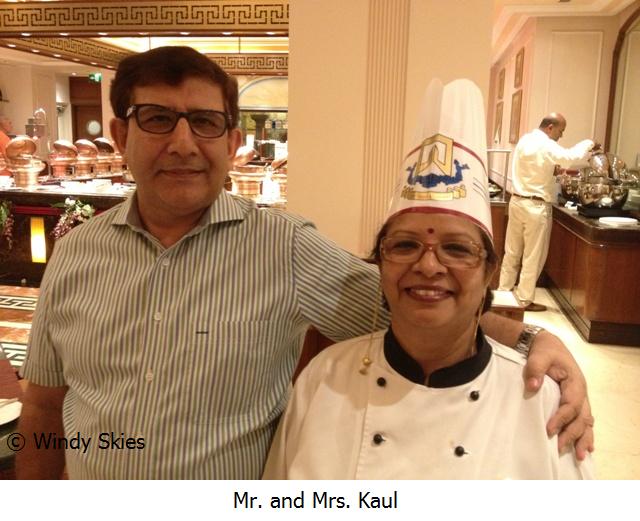
appreciation of patrons brings to the chef, in this instance Mrs. Suman Kaul of
ITC Kakatiya currently in charge of Kashmiri Food Festival at ITC Grand
Central.
Unlike Punjabi cuisine that’s found in every nook and corner restaurant around Mumbai, served up to each cook’s own reading of the recipe, Kashmiri cuisine is conspicuous by its near total absence in roadside restaurants with the exception of what passes of as Kashmiri pulao, regular pulao you’d expect to find at restaurants, only this one is prepared with smattering of fruits that varies depending on what’s available in the restaurant kitchen on the day. The Kashmiri pulao has been my only introduction to Kashmiri cuisine, one I suspected is Kashmiri in name only.
I was looking forward to the opportunity to find out what the Kashmiri pulao actually tasted like at Koshur Saal, the Kashmiri cuisine festival currently underway at ITC Grand Central’s Hornby’s Pavilion (17th – 26th May, 2013), to which we were invited to partake of Kashmiri culinary delights, except the Kashmiri pulao was not on the menu the day of our visit, having featured on the menu the day before!
So I suppose I’ll have to wait for another day, another time to find out. Kashimiri pulao aside, there was much else on offer, none of which I had heard of before let alone taste any, and it was as much a learning experience for the palate as it was an evening of getting to know Suman Kaul and her husband over dinner along with Arundhati, where they kept plying us with Kashmiri food and stories of food.
“My grandmother, Sati
Razdan,” said Suman Kaul when I asked her of the person who got her interested
in cooking. “We’re from Srinagar ,”
she said. “We had our house there. That was before we had to leave Kashmir,” she
continued, her voice trailing off abruptly at what must be memories of a land
lost, of memories orphaned by a virulent campaign that significant sections of Kashmiri Muslims waged to get the Pandits,
Kashmir’s original inhabitants insofar as religious heritage is concerned, out
of the valley.
At one level, stepping into Hornby’s Pavilion for Koshur Saal was about solidarity with Kashmiri Pandit heritage that has survived the jihadi onslaught on their identity. And in sharing their cuisine and interacting with the wonderful couple, Mr. and Mrs. Kaul, it was about bringing home a better understanding of a cuisine, and by consequence, the people for, food does define ethnic identity in many ways. Here I leave my ‘pen’ aside and let the other take over.
~
“There is no love sincerer than the love of food.”
~ George Bernard Shaw
Synonymous with Kashmir ’s
picturesque beauty is its aperitive native cuisine more so the Kashmiri Pandit
Cuisine. From the land of saffron and red chillies
comes Koshur Saal at The Hornby’s Pavilion at ITC Grand Central. On their
invitation we visited them for a special Kashmiri Pandit culinary experience. Authentic
Kashmiri
food was served, with recipe which dates back to hundreds of years and ITC Grand Central is one
place which has never compromised on quality. Some ingredients like collard
greens for Haak, the famous Red Cherries of Kashmir and fish used
for Tsok Gaad (fish in tamarind
sauce) which are not available in Mumbai were transported from Srinagar to my surprise.
Festival had a sumptuous Kashmiri buffet selection for vegetarians and non-vegetarians alike, featuring a fresh selection of Murg Sufyani
Tikka and Veg Shammi Kebab accompanied
with mint chutney and Sattaras (Lamb Soup).
There was a
carving buffet station for freshly made Green
Apple and Potato Fritters (pakoras).
Green apples are a Kashmiri speciality and they were perfectly thin sliced and
battered in gram flour to deep fry and get a unique juicy crispy texture to
them.
For the main course the la carte menu had both
vegetarian and non vegetarian dishes which were without onion and garlic which
is a speciality of Kashmiri cuisine. The gravies are pretty hassle free with
usage of hung curd, sometimes tomatoes and occasionally tamarind for sourness. "Preparing
gravies in Kashmiri cuisine is a lengthy process as they are simmered for hours
with ambrosial flavour of spices such as cinnamon, cardamom, cloves, aniseed, fennel
powder, cumin seeds, saffron, dry ginger, turmeric and to top it all hing (asafoetida)," Chef Suman Kaul exclaimed with a twinkle in her eye before continuing, "hing to hamari jaan hai as it gives the required flavour to the slowly
simmered non-veg dishes."
For the vegetariano in me the buffet had a lot to offer. My
favourite was the Nadur Yakhni, i.e. lotus stem in yoghurt. This delicacy was perfectly
sober, crunchy and juicy, with a vinegarish taste. Guess the taste came from
yogurt simmered for good few hours with spices. Hedder Aluro (mushrooms cooked with potatoes in kashmiri style) was
a lovely combination of two vegetables.
Dum
Monje (knol khol in kashmiri style) had a distinctive flavour and is one of
the first European vegetables grown in India and it grows well in kashmir
valley region. The Kurkure Bhindi
(crispy ladyfingers) were so crispy and fried to perfection in mustard oil. For
cottage cheese lovers there was Tomato Chammar
(paneer cooked in tomato gravy).
For the meat eaters there was the most famous Kashmiri dish Nainey Qualiya (lamb in
yellow gravy Kashmiri style), Kabargarh (lamb
ribs marinated and fried in ghee).Chicken even not quintessentially Kashmiri, has slowly gained
acceptance with youngsters. Gandee Kokur
(chicken with onion) is worth a
try according to Chef Kaul.
The staple diet of every Kashmiri is rice, the most preferred being the dense, slightly sticky grained variety. Rich and redolent with the flavour of the spices used there was Nainey Pulao ( rice cooked with lamb in Kashmiri style) for the meat eaters and the perfectly cooked steam rice for the veggie in me was on the menu of the special buffet at ITC grand central.
On the sweet note there was the all time favourite Shufta which is a lavish assortment of
dry fruits mixed with honey, sugar and saffron and a mesmerising dish called Zuk-e-Shahi which was khoya dumplings
soaked in sweetened milk.
It's been a long day for Suman Kaul but the prospect of introducing her native cuisine to the city and have visitors acquire a taste for it must be a satisfying experience. Back home in Kashmir, the Pandits after returning home on a tired cold day would've had their Kehwah (sweet green tea with almonds and cardamom) post which they would gather for their dinner and at the end of the meal would sip Sheer chai (salted pink tea with almonds), more of a digestive drink, before inching toward the end of the day. The rest of us non-Kashmiris, returning home from this outing would've no such luck. I make a mental note of checking out Sheer chai someday.
"At any given time we would've 10-15 people gathering for food at our place, to taste my grandma's cooking," Mrs. Kaul told us of her relatives visiting their place in Srinagar, remembering her time in Kashmir before they had flee for their lives. "I've never been back there after we had to leave Kashmir."
Mrs. Kaul credited her husband for unflinching support through her career. At the Koshur Saal, they relished the opportunity of meeting fellow Kashmiris over dinner at Hornby's Pavilion. I'm sure many stories will have been exchanged of things back 'home', of food, of memories from Kashmir, wistful and poignant.
"At any given time we would've 10-15 people gathering for food at our place, to taste my grandma's cooking," Mrs. Kaul told us of her relatives visiting their place in Srinagar, remembering her time in Kashmir before they had flee for their lives. "I've never been back there after we had to leave Kashmir."
Mrs. Kaul credited her husband for unflinching support through her career. At the Koshur Saal, they relished the opportunity of meeting fellow Kashmiris over dinner at Hornby's Pavilion. I'm sure many stories will have been exchanged of things back 'home', of food, of memories from Kashmir, wistful and poignant.
May 05, 2013
Kali Rides
That evening in Calcutta we wandered aimlessly among people and before long I found myself seeking the boats that’d take Durga home.
But as I walked towards the ghat
on the river, the waters pulled away from me as if intimidated by my presence, retreating slowly but surely, pushing at the land on the other side until they could push no more. Confused,
I paused and wondered - How was I culpable?
That’s until I saw Kali riding on
the banks.
Then I understood.
Subscribe to:
Posts (Atom)


