May 20, 2010

The Flight of Varanasi’s Wooden Birds


It was only appropriate that it was in Varanasi where pilgrims seek meaning to life, completing the circle at death on the banks of the Ganges that I reaffirmed my faith in the circle of life for an entirely different reason – colourful wooden toys.

Until that evening on the ghats overlooking the river Ganga I had all but nudged away any hopes of ever seeing vendors selling brightly coloured wooden toys again, the staple of my childhood and growing years. On my travels across India ever since I had more or less reconciled to losing one of the bright sparks that colourful wooden toys fashioned by local village artisans imbue places with. Too many cheap plastic toys of Chinese variety abounded.

What arrives, must depart. What departs, must arrive.


On the banks of the Ganges, to the cries of a boatman inducing unruly birds in the river with feed so his customers could take turns in casting feed into the water and watch the spectacle of water birds squawking in delight as they floated down the river along the ghats, it was the brightly coloured wooden Parakeet an elderly vendor was hawking to pilgrims on the ghats that drew my attention to him. It was with some delight that I got up to my feet.

In his outstretched hand he held a Parakeet mounted on a wooden platform while a large cloth bag bulging with wooden toys packed tightly within hung from his shoulder. He spoke not a word as he moved along the steps only pausing by families with children or where he sensed a passing interest in his toys.


Wooden toys are not dead yet, I told myself as I watched him move the toy gently in a short circle. A weight dangling from a thread circled as he moved his hand, tugging at the head and the tail of the Parakeet in turns, jerking them to simulate the Parakeet feeding while its jaunty tail kicked the air in abandon.

The wooden toy seller spoke not a word in all the time he offered his toys for sale as he walked along, only venturing to speak on being asked the price of his toys.


Within minutes the brightly coloured wooden Parakeet had exchanged hands for Rs. 25, and after more years than I could possibly remember I owned a wooden toy again.


He had more bird varieties in his bag. I was tempted. But there was much travel left still and I needed some space in my bags for surprises further on along the road.

While I could resist the charm of a single bird the sight of three birds feeding together proved harder to resist.

In a shop by the roadside that ended soon after at the flight of steps descending to the Dasaswamedh Ghat by the Ganges, the shopkeeper stood up as we paused to look up the many items on display.


Cane baskets in the shape of birds along with other cane work hung at the entrance. While admiring the cane work on display he offered to show us more birds, wooden toys.

Soon the three birds were brought out and as with the Parakeet, they took turns eating out of the centre as he gently swayed the unit, the weight hanging by a thread swung in a gently arc, tugging each bird by turns into pecking at their feet.


“For Rs. 30 you can have it,” he told me.

He said he had his home nearby, at Durgakund. The wooden toys for sale at his shop are made at his home. A local craftsman skilled in making toys and employed by him at his home turns out these wooden toys.

“Most of the toys I have made at my home go outside,” he said.

“Outside as in?”

“To Delhi,” he replied.

I was surprised to hear Delhi as a market for wooden toys.


I did not probe further. While Delhi adjoins Uttar Pradesh and is home to migrants from rural areas looking for work on Delhi’s construction sites and elsewhere, a potential customer base for his wooden toys, I thought it more likely that his colourful wooden toys were headed for the export market, or to cater to the urbane set inclined to doing up their interiors to ethnic themes.

“If you’d prefer more than three birds, I’ve an option. A set of five birds,” he volunteered.

I shook my head.

“It’s only Rs. 50,” he said.

I shook my head again, and pointing to the set of three birds clacking together I said, “This will do.” He smiled. I smiled back.


In the backdrop of the hum characteristic of the ghats I tuned in to the clickety-clack of the birds as they took turns in feeding off the centre. I turned them over to see how they worked before righting them and drawing a gentle circle.

Watching them reeled back time by several years, to a gentler era when it was enough to imagine birds fly to have them take to the skies. A time when reality was what the innocence of childhood believed it to be.

May 17, 2010

Gold and Marriage on Akshaya Tritiya


Watching an afternoon news bulletin on television yesterday I paused to read a crawly rolling off the bottom of the screen noting that Gold prices had breached a new high, 10 gms. topping Rs. 18,000 by several hundred rupees. I assumed the price listed was for 24-carat gold.

Today a newspaper website announced that yesterday over 60,000 couples tied the knot in a single day in Bombay alone. I wouldn’t dare imagine the number across the country. Neither of the two news items was a complete surprise. And like with much of life in India the joy of living and surviving India lies as much in letting the expected surprise you as the unexpected.

Yesterday was Akshaya Tritiya, an auspicious day for Indians seeking to start their innings at the matrimonial altar on a strong footing. It is also an auspicious day for buying gold. This year the day fell on May 16. The year before, Akshaya Tritiya fell on April 27.

In the week leading up to Akshaya Tritiya, newspapers run full page advertisements enticing potential customers into visiting Jewellry showrooms to buy gold.

Akshaya is Sanskrit for ‘never diminishing’ or ‘never ceasing’. And it holds that any venture started on Akshaya Tritiya day is blessed with success and continuity. And it holds that purchases of gold will continue (never diminish) to bring prosperity and good luck when purchased on Akshaya Tritiya. Similarly a marriage conducted on the day will continue to bring good luck to the couple.


It is also a day when marketing teams of newspapers hope to cash in on advertisements from advertisers seeking to reach newly wed couples setting up home after marrying on Akshaya Tritiya day.


While one would expect Jewellry showrooms to lead the way in advertising it is actually no surprise that they have ceded ground to consumer electronics.


And since gold has come to be synonymous with Akshaya Tritiya day, dealers vie with one another with offers of gold on purchases of consumer electronics goods. Here Big Bazaar, a large departmental store chain, promised buyers of furniture worth Rs. 7,500 free gold upto 3 gms. Buyers of electronics worth Rs. 15,000 were promised upto 4 gms. gold free while buyers of BlackBerry ‘Smartphone’ could return home richer by a 1 gm. gold coin offered free with the purchase. The offers were valid for Akshaya Tritiya day only. The copy Aaj Hai Kuchh Naya Ghar Lane Ka Din left little to chance - Today is the day to bring something new home.

Other offers were discounted prices on purchase. Newly weds on the auspicious day are expected to take up on the offers. Many do.

Hindu marriages, particularly among Brahmins, continue until the beginning of Chatur Masa that usually coincides with the beginning of the monsoons in June-July. Advertisers have a little over a month in which to maximize their reach before the start of Chatur Masa. Purchase of gold in India largely revolves around marriage.

Masa is Sanskrit for month while Chaturthi is Sanskrit for four. Chatur is derived from Chaturthi. Chatur Masa extends for four months and is considered inauspicious for marriage. It is only a fortnight after Diwali, usually coinciding with October-November, when Chatur Masa comes to an end is it considered auspicious to schedule marriages again.

Across the whole of India, with the possible exception of regions that are not Hindu majority, gold is lapped up by buyers seeking to invest in it or taking delivery of jewellery custom-made for use in marriages of their children either scheduled on Akshaya Tritiya day or for at a later date.

Jewellery showrooms vie with each other via advertisements offering ‘exciting’ bargains on gold or simply advertise their designs.


Nakshatra
Diamond Jewellery advertising in the Hindustan Times’ HT CafĂ©, called upon readers to “bring home divine luck this Akshaya Tritiya”, claiming their jewellery design to be based on “sacred geometry of the great constellation called the Saptarishi Mandalam”, before elaborating that the “auspicious seven stone diamond design evokes blessings of divine luck upon the wearer.”

Some jewellery showrooms will deck the outside of their shops with flowers to create a festive atmosphere.

Inside there will be little or no place to move around. Staff at Jewellry showrooms cannot expect to get a day off on Akshaya Tritiya.

I am inclined to believe that the retail trade in Gold on Akshaya Tritiya day will likely surpass the retail trade in Gold on any single day among the rest of the countries put together. I do not have figures to back my assertion up, merely sentiment.

It has to be seen to be believed. It is only natural for gold prices to nudge upward on Akshaya Tritiya. With the advent of summer, prospective buyers turn to the Panchanga to find out when is Akshaya Tritiya even as they save up to buy gold on the auspicious day.


Not everyone is enthused with the rise in gold prices that day. The Hindustan Times reported today on unhappy customers having to scale down their gold purchases yesterday to fit shrinking budgets resulting from rising gold prices on the auspicious day. The paper quoted an industry source saying the total sale of gold on the day was 25 tonnes (~ 25,000 kilograms). If the prices had held steady it would have been much higher.

The messaging is not restricted to newspaper advertisements. Banks use their ATM outlets to inform customers of the gold they can purchase from them.


Here ICICI bank is enticing customers using their ATM with “This Akshaya Tritiya, prosper with purity,” before promising them 24-carat that is “99.99% pure”. Banks retain the advertisement for several days after Akshaya Tritiya.

With the increase in gold prices, middle-class homes will quickly revaluate the worth of their gold jewelry in light of the prices breaching record levels and soon conversation in the drawing room will revolve around the lady of the house recounting of how the gold she was gifted at her marriage as Streedhan had cost her father only Rs. 250 a tola (12 gms.) forty years ago. “Since then it has doubled close to 75 times over.”

Soon more stories emerge as the family gathering turns nostalgic.

No home is immune to these comparisons. If weather is known to be a conversation starter with the British, gold prices achieves the same with Indians.


On my visit to Goa last October I noticed passersby pausing by a white board placed on the landing outside the Bank of India branch in Campal, opposite river Mandovi in Panjim, Goa. Curious I stepped up to the white board only to see a listing of gold prices for gold coins on sale at the bank. In the six months since then gold prices have appreciated by close to Rs. 1000 / 10 gms.

Akshaya Tritiya is also a busy day for Brass Bands in their shiny clothes and even shinier instruments as they lead the marriage procession to the tune of Bollywood songs. Marriage halls are booked months in advance while open spaces let out for marriage receptions are tidied up the day before.

On my way back home the previous day I passed glittering pandals being readied for marriage receptions.

But the pulse of the auspicious day is to be found at major Jewellry showrooms. I remember it from our tiptoe to a branch of Tribhovandas Bhimji Zaveri (TBZ) on Akshaya Tritiya last year for a lookaround. The place was buzzing and I whiled away my time between looking at designs and observing customers making decisions, agonizing over exquisite designs arrayed in glass cases many of which were specifically launched on Akshaya Tritiya. Tribhovandas Bhimji Zaveri (TBZ) have been in the business since 1864, building a reputation that few can hope to match.

24-carat gold was priced around Rs. 13,300 per 10 gms. that day. While Tribhovandas Bhimji Zaveri were not offering any discount on gold prices, they had however announced a 50-percent discount on the jewellry making-charge, the charge originally ranging between Rs. 150-600 per gm., depending on Jewellry type and design intricacy.


Customers seeking to exchange their old jewelery for new were sent up a narrow flight of stairs where a staff member was crouched under a makeshift shelter on the terrace, blowtorch in hand. The queue stretched long with customers awaiting their turn with their old jewelry. After melting the jewelry with the blowtorch he would hand the resulting gold puddle in the shape of a coin over to the owner who then carried it back to counter where it was evaluated for purity in a machine and assigned value for the quantity at the prevailing gold price for the day before adjusting the price payable against the price of jewelry bought at the showroom. The jewelry is melted before evaluating its worth to remove impurities if any.

There were many at the store that day seeking to exchange their old gold jewelry for new designs. Women outnumbered men.


Sales girls in matching sari and blouse patiently helped customers with their selections, answering queries while encouraging purchases. The variety on display was bewildering.

While I waited at the counter, a middle-aged couple had borne their old jewelry to the store, eventually evaluated at Rs. 100,000+ after melting it upstairs. They were purchasing pre-ordered gold idols of Lord Shiva and his family comprising of Nandi the bull, Shiva's wife Parvati, and their son Lord Ganapati, totaling Rs. 2,50,000+. After adjusting the amount payable against their old jewelry they bore their purchase home.


The staff at the payment counter was kept busy with customers waiting to make their payments, counting and recounting currency notes, occasionally holding notes up against the light to check their veracity. Pakistan has been in the spotlight over the years for pushing fake currency into India to undermine its economy.

Excited chatter filled up the large viewing hall on the ground floor. A separate section catered to diamonds.

Not all faces were ebullient or excited at making a purchase, some were weighed down. Others were expressionless.

Standing there, in their midst, I had no way of knowing every story. However I was certain of one thing. Not every story had willed its protagonist willingly to the showroom.

May 05, 2010

A Folly On A Gentle Hill in Mehrauli


Among ruins time was never meant to do anything other than stand still, inveigling the visitor into standing still alongside.

Many, many years ago on my bicycling trips across Goa I would lean the bicycle against the tree on spotting a hill and clamber up for a view from the top.

There wasn’t much to be seen from the top except for more trees and even more hills sweeping along in the direction of the Western Ghats mountain ranges, eventually disappearing into the featureless blue in the distance where folds of mountains seemingly overlapped to infinity.

From atop the hill I found the skies bluer than usual and the breeze stiffer. And if I was lucky to find trees as I made the crest, I would catch my breath against a tree taking in the landscape before it was time to hit the paddle again, free-riding along, passing hamlets and villages. The roads were not to be found on any map and I sought those roads more than any other.

Loose gravel made descent tricky but slipping and sliding was part of the charm, including bruises resulting from missteps on my way down the hill. Moreover they lent authenticity to the story at school the next day.


In time as years went by cares of the world took over and it was many years later on a chilly winter morning in Delhi that I was once again enthused on spotting a gentle hill, more of a landscaped mound really, surmounted by a stone canopy or chhatri in Mehrauli. It was my first view of Metcalf’s Folly.


Visitors sat in silence on the closely cropped grass carpeting the rolling hill, their backs warming in the feeble Sun. They sat still, like statues awaiting deliverance from the chilly winter morning.

While the hills from my cycling sojourns along Goa’s interiors were much steeper and higher than the gentle curvature that was barely a stone's throw away from Muhammad Quli Khan’s tomb in Mehrauli, I couldn’t wait to get to the top for a view of the countryside from Metcalf’s Folly, a stone pavilion (canopy) affording splendid views of the skyline above the tops of trees, all the way to Quli Khan’s tomb and beyond, to the Qutb Minar.


Surely, Charles Metcalf must’ve had a good reason to fashion it amid the ruins of Delhi’s long and often bloody history now etched for posterity in the surviving tombs and mosques scattered among kikar trees covering a considerable expanse in Mehrauli’s old quarters said to date back to before 700 A.D. The Folly is of recent construction, dated in the 1850s, and is clearly architected to fit into its setting among tombs and mosques of an earlier era.

The tombs and mosques that abound in the vicinity of the stone canopy predate it by several centuries, each marking many a tumultuous chapter in Delhi’s history, beginning with the ruins of Delhi Sultanate’s ruler Ghiyas ud din Balban’s (1200-1287) tomb a few metres from the canopy.


Charles Metcalf is said to have set the stone canopy so it could be seen from the southern opening of Quli Khan’s tomb that he used as a retreat of sorts. As Toshi and I walked under the shade of trees along Metcalf’s bridge to Quli Khan’s tomb we came upon three groups of local youth enjoying a game of cricket in each of the three empty expanses surrounding Quli Khan’s tomb. It seemed that each time we turned a corner chances were we would come upon a group of children at a game of cricket, a block of stone for wickets, and under the watchful gaze of the Qutb Minar peering over the trees.


A detachment of the Indian Military lolled about on the platform surrounding the octagonal Mughal structure while an armed lookout atop Metcalf’s retreat, formerly Quli Khan’s tomb before Metcalf refurbished it as his summer retreat, kept watch. The Qutb rose in the background. There's nary a spot in Mehrauli from where the Qutb Minar cannot be seen. Like the North Star the Qutb Minar enjoys a majestic permanency in the Delhi skies over Mehrauli, the residents navigating their lives in its backdrop.

About 25 soldiers in crisp army fatigues made up the detachment posted to Quli Khan’s tomb and seemed to be out on a day long exercise. There were no signs they were setting up a camp for the night.


An officer sat on a makeshift table and chair set up on the platform in front of the octagonal structure holding the remains of Quli Khan, the brother of Adham Khan, the Mughal Emperor Akbar’s notorious and brutal foster brother and at one time a General in Akbar’s army before Akbar ordered him thrown to his death from the Agra fort as punishment for killing his Prime Minister, Ataga Khan, in 1562.

Eventually the sixteenth century tomb of Quli Khan came to function as Metcalf’s retreat in the nineteenth century after he took over the tomb and turned it into a retreat, even converting the central hall of the tomb into a dining hall, and adding two annexes one of whose ruins is still visible. The officer was busy at the table making notes while the other soldiers sat on the edge of the platform, their legs over the side and talking among themselves.

The soldier manning a gun atop the structure kept an eye on us as we walked around the octagonal structure, even calling out to his colleagues in uniform to not let us come up to where he was manning the gun. His colleagues cast curious glances at us, one of them telling fellow soldiers within earshot that we were probably tourists, pointing to the camera in my hand.

I made a conscious attempt to not look at the detachment to avoid being drawn into a conversation and possibly awkward questions and went about seeing the monument though not at the gentle pace I might’ve preferred if left to my own devices!


Though we had passed and briefly explored Metcalf’s Folly the first thing in the wintry morning after exploring Balban’s tomb, we had kept it for last, instead setting off to explore the rest of Mehrauli’s architectural heritage before returning to the Folly for a spot of leisurely loll on the grassy slopes.

It was past noon when we finally made our way up the gentle incline, the Qutb rising in the backdrop as we neared the stone canopy. The stone pillars supporting the canopy were bereft of carvings. A nip and a tuck and they were a perfect foil to the canopy.


Resting on the stone platform portions of the Mehrauli architectural landscape meshed with the trees in the distance, occasionally revealing itself in breaks between trees. Two employees of the Archaeology department rested on the gentle incline after lunch, a mandatory lathi (stick) inert in the grass by its master.

I left Toshi gazing at the Qutb Minar from under the canopy as it rose above the treeline in its signature red sandstone before making my way to a patch of shade on the grassy slope. There I settled down in the grass, resting on my knees stretched behind me.

I could have sat there for a long time.

Time was never meant to move among ruins and nor were wandering footsteps of a meandering traveller.

April 08, 2010

Books Travellers Read in Mumbai Locals – Part II


Continuing with my series, this is Part II of my ongoing attempt to note the books my fellow travellers read in Mumbai local trains on their way to work and back.

Seeing Dan Brown’s Digital Fortress in the hands of a traveler reeled me back to several years ago.


There was a time a few years ago when if you were reading a book it had to be The Da Vinci Code. I saw more copies of the Dan Brown bestseller in Mumbai local trains than any other title. There was no competition, even Jeffrey Archer, the perennial favorite, had fallen by the wayside. The Da Vinci Code came in a variety of covers, and came to be seen in a ‘variety’ of hands.

In time those who read from their passion for books, those who were the curious sort, and those who would rather read than be called out for ignorance of the book in their circles were done with reading The Da Vinci Code. The regular readers among them, possibly still influenced by the Dan Brown thriller from the year before moved on to his other titles, Digital Fortress being one of them.


In time I saw more people reading Digital Fortress. But I must say one thing from observing reading patterns in trains. If not for The Da Vinci Code I doubt if Brown's Digital Fortress would’ve gathered as much currency with readers as it apparently does. The Da Vinci Code was something else for more reasons than one.

Squeezed in the crowds I would let my mind float above the very obvious discomfort by co-relating faces with the books in their hands. It was with The Da Vinci Code that I saw more variety in the faces reading the book than I normally would. Could it be possible that it had made readers out of non-readers. I doubt it even as I concede that there were exceptions knowing well that exceptions are never the rule.

From the faces of some of the travelers I saw with The Da Vinci Code, I doubted if any of them would ever come around to reading another book once they managed to plough through Brown's bestselling offering. I couldn't be sure. Yet I took some pleasure in my certainty as if I had surmounted a level in face reading.

Held immovable in the crowd jamming the compartment my mind would float free giving me ample mind-space to maneuver my discomfort in and while away my traveling time in trying to make sense of the faces jammed around me, for there was no other way to survive the human fortress the phalanx of fellow travelers would present on my way to work and back.


While it might still be possible to flip through thrillers in crowded trains without losing the plot, the same cannot be said if you’re reading Trout on Strategy.


The gent in the aisle alternated between reading Jack Trout’s Trout on Strategy and his cellphone. Each time he would return to the book after smsing, before glancing at the cellphone to check for replies.

The lot of corporate workers is now tied to the smart Blackberrys they sport, often carrying on conversations in crowded trains when they’re not checking or answering their mails, their voices often rising to be heard about the din even as they’re supposedly driven by exasperation to berate their subordinates at work with a succession of threats as to consequences that await if deadlines are not met.

It is a strategy that works in India in keeping the subordinate level on the mat, allowed to breathe just enough to finish the work assigned. It wouldve been interesting to read of Jack Trout's take on such strategies.

Given a choice I would much rather read John le Carré than Trout. Long ago I started with John le Carré, reading up the titles I could get hold of, before shifting to Robert Ludlum. John le Carré is the nom de plume of David John Moore Cornwell.


So when I happened upon an office-goer immersed in John le CarrĂ©’s A Most Wanted Man I gladly let my mind relapse to my school days in Goa years ago. It was a Reader’s Digest profile of John le CarrĂ© I read in high school that pushed me into reading his books.

I still remember the black and white image of John le CarrĂ© the profile carried, prompting me into thinking, ‘Aha, he does look like a spy.’ Back then it helped if the author looked a bit of a spy himself, sharp features et al, not that any of us had ever seen a real spy but we hoped to, and probably did in the pages we devoured of spy thrillers beginning with le CarrĂ©. After all, imagination helped us replace the reality of dreary textbooks at school.

Writing of reality and dreams in the context of his books, John le Carré notes:

A good writer is an expert on nothing except himself. And on that subject, if he is wise, he holds his tongue. Some of you may wonder why I am reluctant to submit to interviews on television and radio and in the press. The answer is that nothing that I write is authentic. It is the stuff of dreams, not reality. Yet I am treated by the media as though I wrote espionage handbooks.

While John le CarrĂ© might not agree with the reality we ‘experienced’ in his books we had little doubt about its authenticity. No fiction will succeed if it does not sound like non fiction.

I haven’t read le Carre’s A Most Wanted Man. I would be surprised if it isn't as real as the rest of his books. On his website, John le CarrĂ© introduces A Most Wanted Man thus:

A half-starved young Russian man in a long black overcoat is smuggled into Hamburg at dead of night. He has an improbable amount of cash secreted in a purse round his neck. He is a devout Muslim. Or is he? He says his name is Issa.

Annabel, an idealistic young German civil rights lawyer, determines to save Issa from deportation. Soon her client’s survival becomes more important to her than her own career. In pursuit of Issa’s mysterious past, she confronts the incongruous Tommy Brue, the sixty-year-old scion of Brue Frères, a failing British bank based in Hamburg.

A triangle of impossible loves is born.

Meanwhile, scenting a sure kill in the so-called War on Terror, the spies of three nations converge upon the innocents.

Poignant, compassionate, peopled with characters the reader never wants to let go, A Most Wanted Man is alive with humour, yet prickles with tension until the last heart-stopping page. It is also a work of deep humanity, and uncommon relevance to our times.

To watch John le Carré talk about A Most Wanted Man, click here.

It’s never an easy jump from John le CarrĂ© to Paulo Coelho, arguably the most read author on Mumbai local trains now.

Each time I see someone reading a Paulo Coelho title on the local train, and believe me many do, I cannot help wonder about the persona of the reader. I look even closer at the face tucked into a Paulo Coelho title.

On the local train I often count minutes left to my destination each time it makes a stop at a station along the way.


And when I saw a youth immersed in Paulo Coelho’s Eleven Minutes, I made a quick mental note to find out if any of the stations along the way is eleven minutes away from my destination, an exercise most unnecessary but strange are the ways a mind works in whiling away time. Thirteen minutes, yes. But eleven minutes? No. Now, whenever I pass the station thirteen minutes from my destination I’m reminded of Paulo Coelho’s Eleven Minutes.

Stacked tightly in crowded trains feels like a prisoner might, mentally ticking away minutes to freedom. Travelling by Mumbai local trains is not very different even given the occasional freedom of space one experiences from time to time.

Growing up we used to be told that we would be known by the company we keep, by implication nudging us into using discretion in choosing our associations, friends or otherwise.

It was a refrain we heard as much in our classrooms as back home among elders at family gatherings, driven as it was by fears founded in the unsavoury happenings around them. Family priorities differ from community to community and I’m not talking about neighbourhoods here. And I suspect it had to do more with their fear of our taking to smoking and drinking before progressing to the ‘other things’. While it was hardly repeated it swung about tangentially in conversations, reminding of: You’re known by the company you keep.

Later we came upon it in books, further cementing the adage in our minds, for we surmised that if it was in a book it had to be true. Moreover if any of us were to sidestep the caveat there was no hiding from consequences. In small towns there’s little anonymity, in turn exerting an invisible pressure to stay clean and stay on course.

In time when we discovered the library in high school, the adage mutated to: You’re known by the books you read.

And sure enough the lot of us attempted to outdo the other in the number of books we read and in the diversity of titles we could make sense of, excepting of course James Hadley Chase. The covers were too saucy to take to the female librarian at my school for issuing them let alone bring them home to middle-class families. But Nilesh, my senior at high school, was an exception.

Each morning I took my regular route to school. And once each week, sometimes twice, as I turned the corner and hit the main stretch of the road, I would invariably find myself walking behind Nilesh. He was thin, fair, and walked straight, his khaki school bag strapped tightly to his back. Propped up, as if by design, between the two canvas straps holding the upper flap down, and most of us had little doubt that it was deliberate, would be a James Hadley Chase title, half the jacket jutting out prominently for anyone who cared to look, displaying the semi-clad and sensuous model fronting the title. No one who walked to school behind Nilesh each morning missed noticing the provocatively undressed model ‘strapped’ to his back. Looking back now I can only imagine what the 80s school-going souls must’ve made of the whole thing.

Soon enough an enterprising classmate would smuggle in a Chase title duly wrapped in brown paper so it would not stand out among textbooks we read at school. So whenever any of us spied a classmate reading from a covered book with an intensity that was never bestowed on hapless textbooks, we exchanged knowing glances and soon more eyes would turn to the ‘culprit’ who remained oblivious to it all.


So when I saw a fellow traveller opposite me reading from a book whose jacket appeared to be hastily covered in a newspaper I became curious, wondering if he was apprehensive of being seen reading the book. It was very likely he was.


As he flipped the pages I caught sight of the title – The 3 Mistakes of My Life, a tacky campus book by Chetan Bhagat. No wonder he had the book jacket wrapped up in a newspaper.

If you’re known by the books you read, be assured there’ll be books a ‘self respecting reader’ will not want to be caught dead reading, more so if it is a Chetan Bhagat book.


But apparently not everyone thinks so, even flaunting the Chetan Bhagat title: The 3 Mistakes of My Life.

But then you might be able to explain away his choice of book from his choice of his t-shirt, rather on his choice of the attitude screaming from his chest.

Yes, sometimes it is that simple.


Maybe the adage could now change to: At times you’re known by your clothes as well, rather you're known by what you wear when you're reading Chetan Bhagat!


Note: Read Part I and Part III in my series noting the books my fellow travelers read in Mumbai local trains on their way to work and back, and sometimes on their way elsewhere around the city.

A Request: I started out photographing travelers reading books few years ago to build up sufficient numbers that could be converted into posts. I’m all for this concept and my series involving traveling readers pictured with their books being taken forward by others in their cities and I would appreciate it very much if you would note/credit and link back here if this inspired you to do a series or a variation of the series of your own.

Since this is a part of my larger India Book Project involving books and the reading people, I’ll be counting on the link-back for continued and further participation of new readers.

Related Posts in my India Book Project Series

1. Granthayan, A Mobile Book Store
2. Indian Copy

March 25, 2010

Books Travellers Read in Mumbai Locals – Part I


This is Part I of my ongoing attempt to note the books my fellow travellers read in Mumbai local trains on their way to work and back.

I ride the infamous Mumbai local train network to work each day, unconsciously observing my fellow passengers when I’m not squeezed breathless or pounded into submission in the surging crowds that bring a new meaning to the concept of pressure.

While it is not always easy to move around once inside the train, it is sometimes possible to pull off a picture of the reader and his book. The readers will rarely look up from the books they’re reading. They don’t need to, tuned in as they are to approaching stations from years of travelling on the local train network.

In each installment I intend to feature 7 readers unless I happen upon the same person twice. While this is rare, it’s a possibility if you’re a regular on the suburban locals in the morning rush hour and the fellow traveler loves his books enough to bring a new one along every once in a while. A few others I might meet on trains on my travels around the city on weekends.


I had never heard of Fluke before chancing upon it one evening returning from work. The light was low, yet he barely moved his head from the narrative in his hands. I could make out the rear end of a whale on the cover but little else.

“I found the story interesting. It’s about a whale,” he told me, impatient to return to the narrative.

And I let him dive straight back in even as I wondered what the book was all about, mentally tracing a story I imagined about the whale in the book. In another’s hands there’s much a book cover can tell you if you look at it long enough, and frequently enough. It shortened my journey by much.

I hope Kindle keeps its nose out of Bombay local trains.

On his site, Christopher Moore introduces Fluke thus:

Just why do humpback whales sing? That’s the question that has marine behavioral biologist Nate Quinn and his crew poking, charting, recording, and photographing very big, wet, gray marine mammals. Until the extraordinary day when a whale lifts its tail into the air to display a cryptic message spelled out in foot-high letters: Bite me.

(a) Christopher Moore’s Website, (b) Fluke reviewed on Blogcritics, and (c) His Essay: Teaching Yoga to an Elephant.


A blood red cover is bound to attract attention. More so if the book is titled: What They Don’t Teach You At Harvard Business School.

I usually steer clear of advertising lines especially if they strut around on the cover, daring me to ignore them.

But as the train rolled along and the gentleman, for the better part of the hour didn’t so much as look out the window, my curiosity bubble was pricked. I consented by a bit and allowed myself another look at the cover before turning away. I was not done yet.

I imagined the stand-up lines most likely peppering Mark McCormack’s Harvard narrative, the kind of Smart Alec repartees you sometimes get to see in Twitter timelines of urbane, and occasionally Americanised Desis, often passing for conversation while they secretly strut at the brilliance of their tweets. Narcissus would’ve loved Twitter. All the more reason to stay away from the blood red I told myself, turning to the window for inspiration.

And that might’ve been the end of the story but it wasn’t, not by a long way.

One morning, sunlight streaming through the door and what do I see, again? Take a guess.


What They Don’t Teach You At Harvard Business School

!

He looked every bit a student studying for a Management degree at one of the many Management Institutes in the city.


And when I saw him again a month later, this time immersed in Malcolm Gladwell’s The Tipping Point, I had little doubt that here was a Manager in the making. I had no way of finding out though. Not that it mattered.

If I thought that was the end of the Harvard narrative in Mumbai local trains I was mistaken.


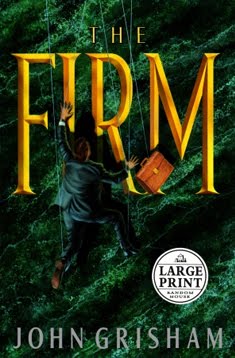
The Harvard narrative returned with The Firm, John Grisham’s gripping tale of Mitchell Y. McDeere, a law student who graduated near the top of his class at Harvard Law School before finding himself in a dangerous bind at Bendini, Lambert and Locke, a law firm in Memphis he had joined on a fat salary.

This time around I would’ve been surprised if the gentleman immersed in The Firm would’ve so much as looked up from the book as I slid into the seat opposite him.

I was left with little doubt that for some reason the Harvard narrative must relish the sweltering confines of local trains driving Bombay’s beat, if for nothing else than for the demands the local trains make on managers surviving their daily commute to their offices.

Published in 1991, The Firm was made into a film in 1993 by Sydney Pollack, starring Tom Cruise in the lead role of Mitch McDeere.

On his website, John Grisham introduces The Firm thus:

At the top of his class at Harvard Law, he had his choice of the best in America. He made a deadly mistake. When Mitch McDeere signed on with Bendini, Lambert & Locke of Memphis, he thought he and his beautiful wife, Abby, were on their way. The firm leased him a BMW, paid off his school loans, arranged a mortgage and hired him a decorator. Mitch McDeere should have remembered what his brother Ray — doing fifteen years in a Tennessee jail — already knew. You never get nothing for nothing. Now the FBI has the lowdown on Mitch’s firm and needs his help. Mitch is caught between a rock and a hard place, with no choice — if he wants to live.

For more, visit John Grisham’s site.


Arthur Hailey is among the authors favoured by travelers on Mumbai locals. Spotting Wheels in the hands of a reader brought back a few memories. Wheels happened to be the first book I read of Arthur Hailey’s.


I had returned to Goa from Bombay after picking up the much used copy of Hailey's Wheels from a roadside vendor in Fort, off Flora Fountain. Those days Fort was happily overrun by second-hand book sellers, and no trip to Bombay was complete without the customary pilgrimage to Fort, and the pavements heaped with second-hand and pirated books.

While there’s no love lost for Muhammad Ali Jinnah in India, even considering that many people will reach across the aisle to tell you in no uncertain terms that we should be glad that he carved Pakistan out of India, happily adding the common refrain: “Imagine being saddled with those Pakistani masses that can never be redeemed from the cult of violence that runs in their veins.” Strong opinions.


It’s rare to find travelers in local trains seeking succour in political narratives. So when I found a college student immersed in Rafiq Zakaria’s The Man Who divided India, I shot him the question - Why this book?

“I was curious of the role Muhammed Ali Jinnah played in the partition of India,” he told me, hence this book,” before continuing, “Much of what they teach us in college is from textbooks. I was curious of Jinnah’s portrayal outside of our textbooks, to read more since textbooks can only cover so much and no more.”


Note: Read Part II and Part III in my series noting the books my fellow travelers read in Mumbai local trains on their way to work and back, and sometimes on their way elsewhere around the city.

A Request: I started out photographing travelers reading books few years ago to build up sufficient numbers that could be converted into posts. I’m all for this concept and my series involving traveling readers pictured with their books being taken forward by others in their cities and I would appreciate it very much if you would note/credit and link back here if this inspired you to do a series or a variation of the series of your own.

Since this is a part of my larger India Book Project involving books and the reading people, I’ll be counting on the link-back for continued and further participation of new readers.


Related Posts in my India Book Project Series

1. Granthayan, A Mobile Book Store
2. Indian Copy